How to Wear a Maxi Dress Over 40: 12 Looks That Flatter Every Height
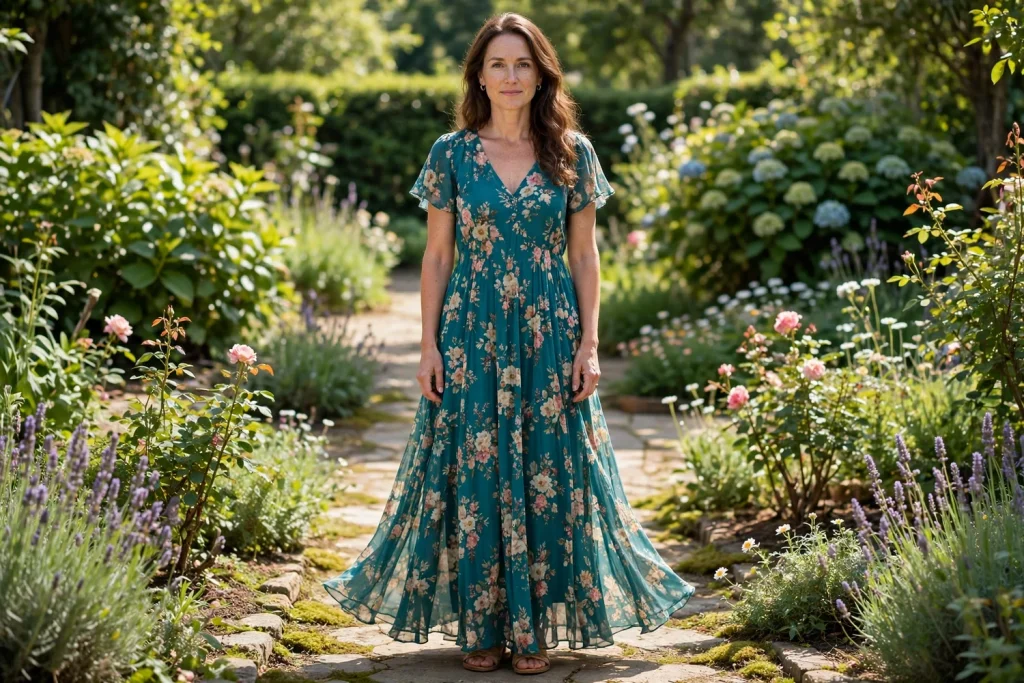
Learning how to wear a maxi dress over 40 starts with fit, not fashion rules. The right length changes everything.
A maxi should feel easy, never heavy. When it fits well, you stop adjusting it all day.
This guide covers length, waist, neckline, prints, shoes, and layers. Each tip works for real life.
Pick the ideas that suit your height and routine. Small changes make a maxi look made for you.
How to Wear a Maxi Dress Over 40: Start With the Fit
Start with length. The hem should skim your ankle bone, not pool on the floor.
Try the dress on with the shoes you will actually wear. Heel height changes where the hem falls.
Define your waist, even softly. A seam, a tie, or a thin belt stops the dress swallowing your shape.
Choose a neckline that opens the face. V-necks and scoop necks work harder than high round necks.
Match the print to your frame. Smaller prints flatter petites, while taller women carry larger prints easily.
Keep layers short. A cropped jacket holds your waistline, while a long cardigan can shorten your legs.
Let one piece lead. If the dress is printed, keep shoes and bag quiet and simple.
Check the dress sitting down. A good maxi stays comfortable at lunch, in the car, and at events.
Buy for your real routine. A dress you can walk in beats one you only admire in the mirror.
Hemming is not failure. A small alteration turns a good dress into one that fits perfectly.
Think about the bag. A small crossbody keeps hands free and never fights the dress volume.
Iron or steam before wearing. A long dress shows creases more than any shorter piece does.
1. Get the Length Right

The hem should end just above or below your ankle bone. That spot lengthens your legs instead of cutting them short.
Avoid a hem that lands exactly on the ankle. It chops your silhouette and makes the dress look borrowed.
Walk a few steps in the shop. The hem should move freely without catching under your shoes.
For evenings, a floor-grazing hem works, but only if just your toes peek out beneath it.
The first rule of how to wear a maxi dress over 40 is simple: length first, everything else second.
If the hem drags, get it altered. A small hem job costs little and saves the dress from damage.
Keep the hem clean. Mud and fraying show fastest at ankle level, so check it after wearing.
Hem guide by height
Petite: just above the ankle. Medium height: at the ankle bone. Tall: floor-grazing with toes peeking out.
2. Empire Waist for Shape

An empire waist sits just under the bust and lets the skirt fall freely. It creates length through the lower body.
This cut suits softer middles beautifully. It skims without clinging and never digs in at the waist.
Look for a seam or tie placed high. A dropped waist does the opposite and shortens your legs.
Pair it with a delicate necklace. The raised waistline already draws the eye upward toward your face.
Empire styles work for weddings and lunches alike. The shape stays elegant from morning to evening.
Smocked bodices give gentle stretch. They fit bust changes comfortably while holding the empire shape.
Empire maxis travel well. The high waist and loose skirt resist creasing in a suitcase.
Pro tip: empire placement
The seam should sit just under the bust, not at the ribs. One inch too low, and the lengthening effect disappears.
3. V-Neck to Lengthen

A V-neck opens the chest and lengthens the neck. It stops a long dress from looking heavy on top.
Scoop necks give a similar effect. Both keep the top half light while the skirt stays long.
High round necks can overwhelm a maxi. They close off the face and add visual weight up top.
Add a short pendant that follows the V shape. It echoes the neckline and pulls attention upward.
- A sheer panel keeps a deep V modest
- A camisole under a V adds coverage
- A short pendant follows the V shape
If you prefer coverage, a sheer panel keeps the V shape while staying modest and comfortable.
A V-neck also suits statement earrings. The open neckline gives earrings room to shine.
Do this, skip that
Do: V-necks and scoop necks that open the face. Skip: high round necks on long dresses, since they add weight up top.
4. A-Line That Skims

An A-line skirt flares gently from the waist. It skims hips and thighs without adding bulk anywhere.
Avoid stiff fabrics that hold their shape outward. Soft rayon and crepe fall closer to the body.
The flare should start at your natural waist. A flare starting lower can widen the hip area.
A-line maxis suit most body shapes. The shape gives movement while keeping the silhouette balanced.
Check the back in a mirror. A good A-line hangs straight without pulling or ballooning behind you.
Pockets add ease to an A-line. They keep the dress practical for days when you carry little else.
A-line skirts handle wind gracefully. The flare moves without wrapping around your legs.
Before and after
Before: stiff fabric that holds outward and adds width. After: soft crepe that skims the body and moves with you.
5. Small Prints, Big Impact
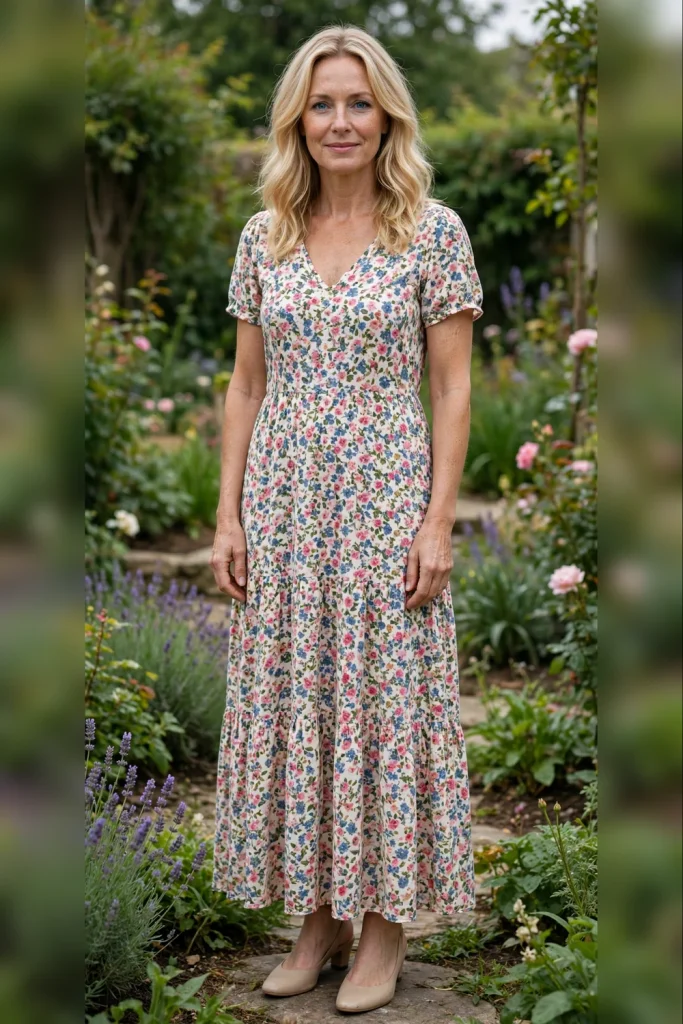
Small florals and delicate dots flatter shorter frames. Large bold prints can swallow a petite figure whole.
Taller women carry bigger prints with ease. Scale your print to your height, not to the trend.
Keep accessories quiet with a printed maxi. A plain bag and simple sandals let the dress speak.
Print mixing works when two prints share one color. Our print mixing guide shows easy combinations that stay calm.
- Vertical stripes lengthen without effort
- Tonal patterns create a long line
- Small dots suit petite frames best
Try the dress in daylight before buying. Shop lighting hides print scale problems that daylight reveals.
One print per outfit stays calm. Two loud prints under a long hem compete for attention.
Printed maxi pairing guide
Printed dress plus plain bag plus simple sandals. Add one quiet bracelet, and the outfit is done.
6. Solid Color Column

One solid color from shoulder to hem creates an unbroken vertical line. It reads taller instantly.
Navy, emerald, and burgundy work beautifully as columns. They look polished without trying hard.
A solid column is the easiest answer to how to wear a maxi dress over 40 with confidence.
Tonal dressing follows the same idea. Our monochrome guide shows how one color family flatters every figure.
Add interest through texture, not color. A crepe dress with leather sandals feels rich and complete.
A single color needs good fabric. Cheap thin fabric shows every line, while quality crepe holds shape.
Solid dresses take bold jewelry well. One strong necklace lifts a whole column outfit.
Three columns to try
Navy with navy sandals, emerald with gold jewellery, burgundy with nude sandals. Each one reads long and polished.
7. Belt It Thin at the Waist
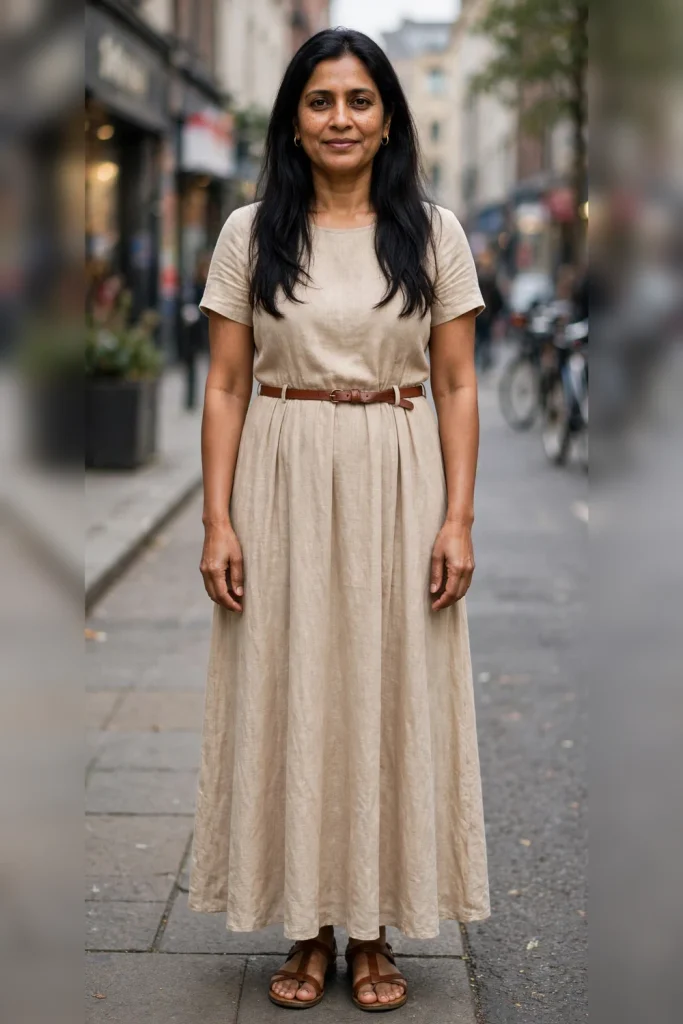
A thin belt defines the waist without breaking the line. Chunky belts chop a long dress into sections.
Match the belt to your shoes or bag. Tonal matching keeps the outfit calm and pulled together.
Place the belt at your natural waist. Higher placement works for empire styles, lower placement rarely flatters.
Leather, suede, and woven belts all work. Choose a width that suits your frame, not the widest option.
Skip the belt on dresses with a built-in tie. Two waist details compete and clutter the middle.
A belt in the dress color extends the column. It defines the waist without cutting the outfit in half.
A thin belt also works over a jacket. Belt the blazer, not the dress, for a layered waist.
Belt checklist
Thin, not chunky. At the natural waist. Tonal with shoes or bag. Skip it when the dress already ties.
8. Denim Jacket for Casual Days
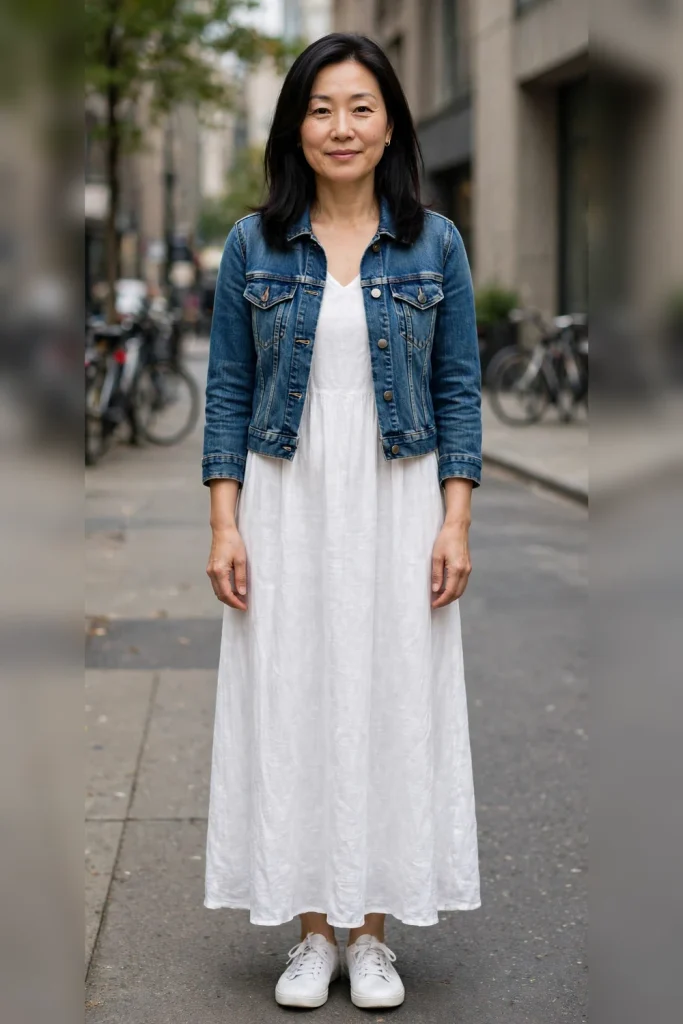
A cropped denim jacket is the easiest maxi layer. It holds your waistline while keeping the look casual.
Choose a jacket that ends at your waist. Longer jackets cover the dress and shorten your legs visually.
Light wash denim suits summer whites and pastels. Dark wash denim sharpens brighter printed maxis.
Roll the sleeves to the elbow. It keeps the outfit relaxed and shows a bracelet or watch.
Leave the jacket open over a printed maxi. The open line runs long and slims the whole outfit.
A denim jacket also covers sunburned shoulders. It turns a beach dress into a lunch-ready outfit.
Denim jackets soften formal maxis. One casual layer makes a dressy dress daytime ready.
Denim jacket outfit in 3 steps
Step 1: pick a printed or white maxi. Step 2: add a cropped jacket that ends at the waist. Step 3: finish with flat sandals and a crossbody bag.
9. Longline Blazer for Smart Days
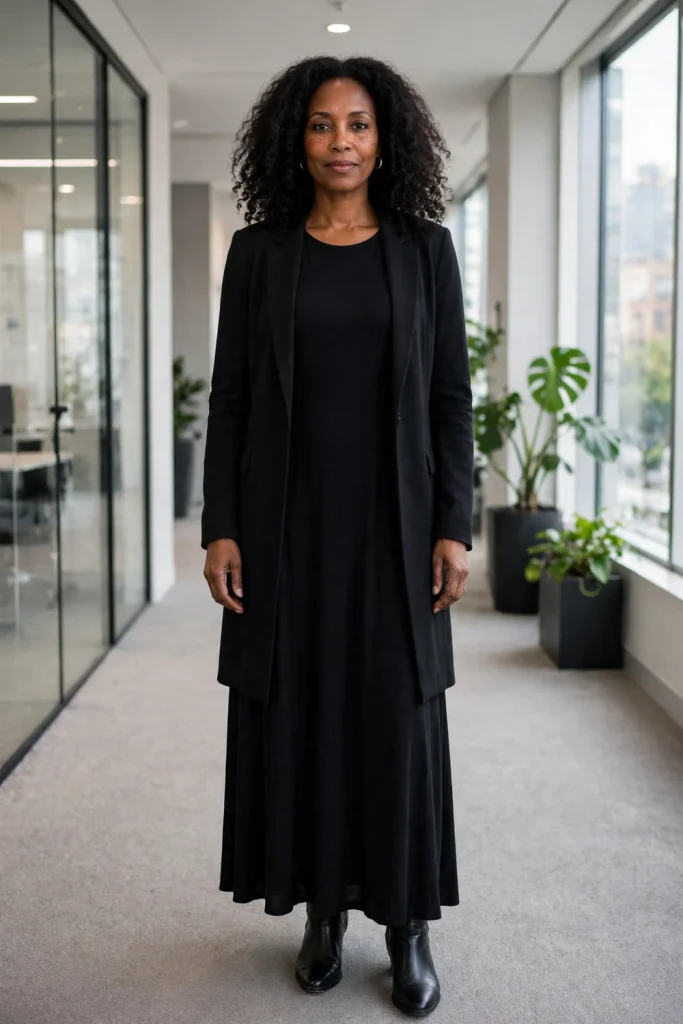
A longline blazer turns a maxi into smart daywear. It adds structure without hiding the dress.
Keep the blazer open and the dress simple. A solid maxi underneath reads most polished.
Match the blazer length to the dress hem. Mid-calf blazers pair well with ankle-skimming maxis.
Navy and charcoal blazers work hardest. They sharpen brights and deepen dark dresses equally.
Finish with pointed flats or low heels. The pointed toe continues the long line the blazer starts.
A blazer over a maxi suits work events. It reads professional while staying far more comfortable than trousers.
Blazers also add pockets. A phone and keys fit neatly without spoiling the dress line.
Blazer and maxi occasions
Work lunch: navy blazer over a solid maxi. Dinner: charcoal blazer over a dark print. Church: navy blazer over a floral maxi.
10. Flat Sandals Done Right
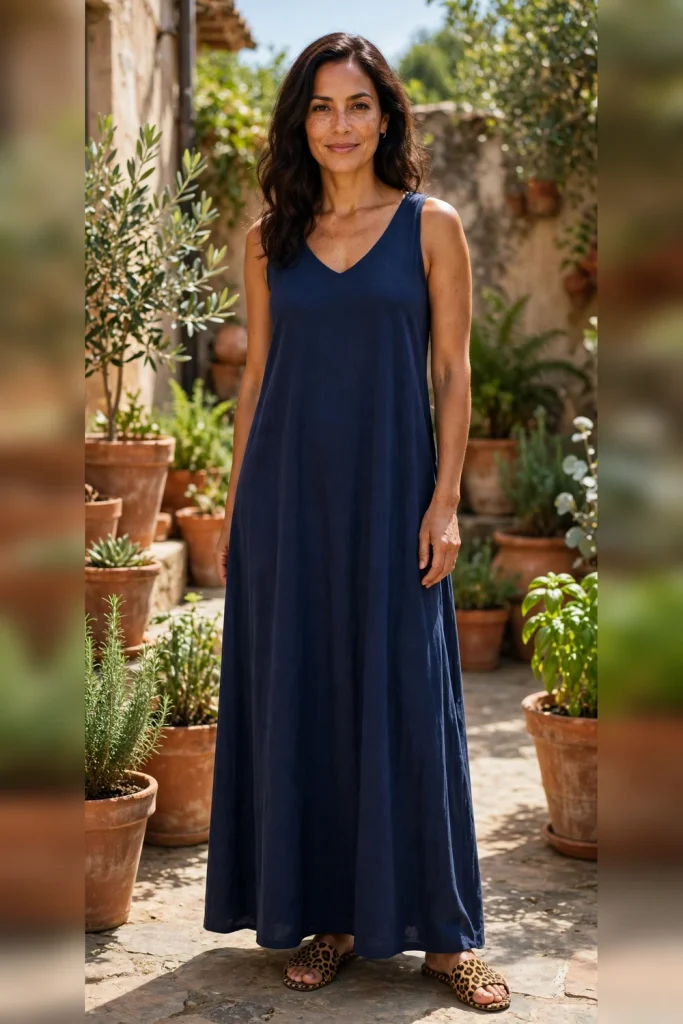
Flat sandals suit daytime maxis perfectly. Choose a slim strap that shows some foot and lengthens the leg.
Avoid heavy chunky soles under a long dress. They shorten the leg and fight the dress flow.
Nude sandals blend with bare legs. The unbroken line makes legs look longer without heels.
Leopard flats add quiet fun to a plain maxi. Our animal print guide shows how to wear one print calmly.
Test sandals on a short walk first. A maxi hides blisters, but it cannot hide an unhappy walk.
Carry sandals in your bag for long days. Swap heels for flats when walking, then change back indoors.
Flat sandals dry fast after rain. Leather soles grip better than smooth plastic ones.
Flat sandal mistakes
Heavy soles that shorten the leg, chunky straps that hide the foot, and soles with no grip on wet paths.
11. Wedges for Height Without Pain

Wedges give height without heel pain. The wide base spreads weight and steadies every step.
Low wedges suit all-day events best. Two inches lift the hem just enough to show the shoe.
Espadrille wedges love summer maxis. Leather wedges carry the same dress into autumn evenings.
Match wedge color to the dress or your skin tone. Either choice keeps the long line intact.
- Break wedges in at home first
- Keep a pair of flats in your bag
- Choose straps that match your skin tone
Wedges with ankle straps need care. Straps can cut the leg line, so keep them slim and tonal.
Wedges suit garden events. They never sink into grass the way thin heels do.
Comfort first
A maxi you can walk in all day beats one you only admire. Height should never cost you a good day.
12. Petite Maxi Tricks
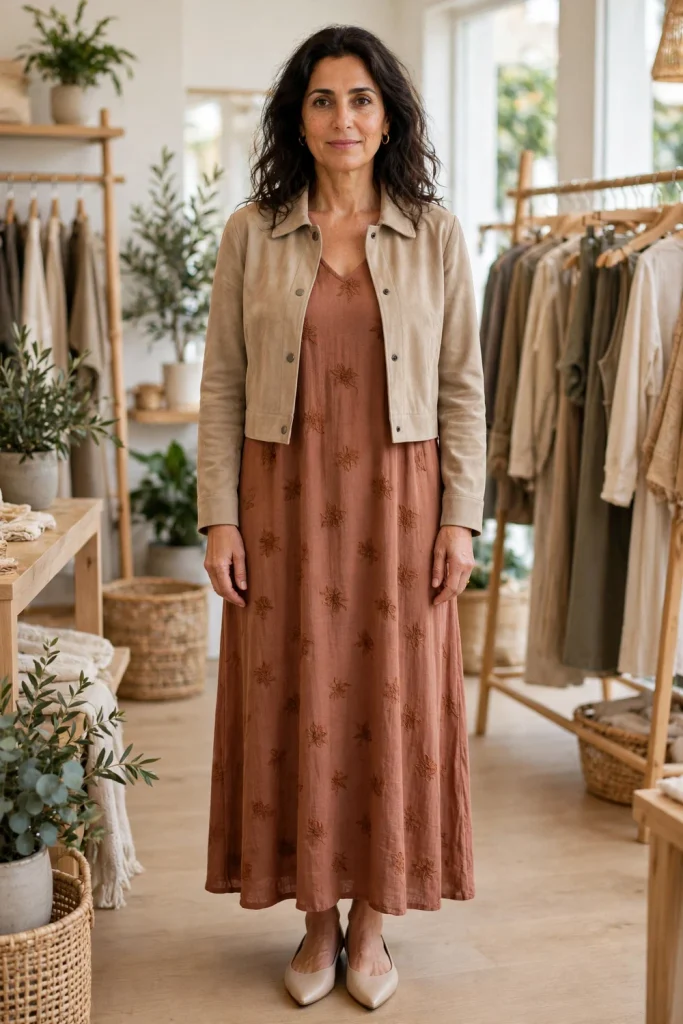
Petites should shop petite lines first. A dress made for a shorter frame fits the torso and hem together.
Cropped layers beat long cardigans. A short jacket or bolero keeps your waistline visible and high.
Pointed flats add length without heels. The pointed toe extends the leg line under the hem.
Petite or tall, how to wear a maxi dress over 40 comes down to proportion, not height.
A light scarf draped over the shoulders warms cool evenings. Our scarf guide covers draping that stays simple.
Hemming beats relying on high heels. A dress cut to your height works with flats and heels alike.
Petite maxis also suit high-low hems. The shorter front shows shoes while the back stays long.
Maxi across the seasons
Spring: linen maxi with a cropped jacket. Summer: cotton maxi with flat sandals. Autumn: maxi with ankle boots. Winter: knit maxi with a long coat.
The maxi, made yours
Length first, waist defined, neckline open, shoes that let you walk. Get those four right, and any maxi looks made for you. Try one idea this week, and keep the ones that feel like you.
What length maxi suits petite women over 40?
Ankle-skimming or just above the ankle works best. Shop petite lines first, and hem rather than relying on high heels every time.
Can I wear a maxi dress to a wedding over 40?
Yes. Choose a solid or small print maxi, add a low wedge or block heel, and layer a structured blazer or cropped jacket.
What shoes go with a maxi dress?
Flat sandals for daytime, low wedges for height without pain, pointed flats for length, and ankle boots for autumn.
How do I layer a maxi dress in winter?
Wear a fitted turtleneck under a sleeveless maxi, add knee boots, and finish with a long wool coat that falls below the knee.
Should I belt a maxi dress?
A thin belt at the natural waist helps most maxis. Skip it when the dress already has a built-in tie or a strong empire seam.